
Glendale · Dental Care
First Orthodontic Evaluation at Age 7: A Glendale Parent’s Guide
The American Association of Orthodontists recommends every child have their first orthodontic evaluation at age 7. Glendale parents frequently reach this age and wonder: does my child actually need this? Isn't orthodontic treatment for…
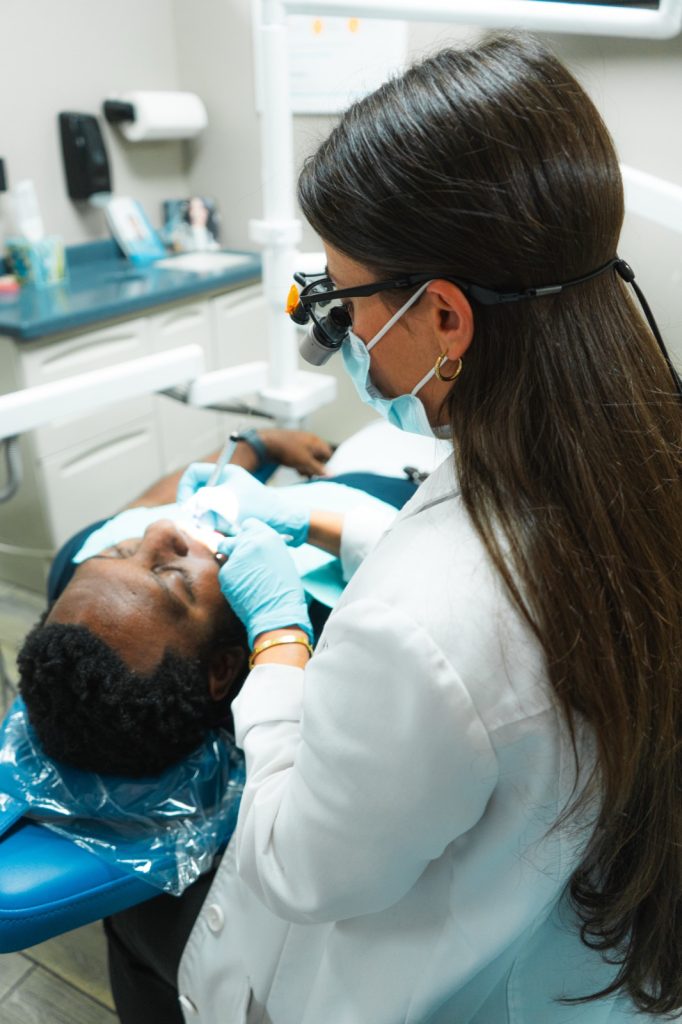
The American Association of Orthodontists recommends every child have their first orthodontic evaluation at age 7. Glendale parents frequently reach this age and wonder: does my child actually need this? Isn’t orthodontic treatment for later? What’s being evaluated at age 7 that couldn’t wait until 10 or 12? Here’s the straight answer, and what to expect at that first visit.
Why age 7 specifically
At age 7, most children have a specific mix of baby teeth and newly erupted permanent teeth, the first permanent molars are in, some of the central incisors are in or erupting, and the skeletal growth pattern is reasonably predictable. This specific window provides the best opportunity to identify certain issues early, when intervention (if needed) is simpler and more effective than it would be later.
Important clarification: the age 7 screening is not about deciding whether to place braces at age 7. Most 7-year-olds don’t need orthodontic treatment. The screening is about identifying the minority of children who would benefit from early intervention, the majority who will simply be monitored until comprehensive treatment age (10-14), and the rare cases requiring specialized early approach.
What the screening actually evaluates
At a proper age-7 orthodontic screening, we look for:
1. Crossbite
Upper and lower teeth misaligned laterally, upper teeth biting inside lower teeth on one or both sides. In children, crossbite can reflect an underlying skeletal discrepancy that’s easier to correct with an expander (a palatal appliance) during active growth than after growth is complete.
Uncorrected skeletal crossbite can contribute to asymmetric jaw growth, asymmetric facial development, and TMD later in life. Early intervention with expansion typically resolves the issue in 6-12 months with a non-extraction, non-brace approach.
2. Severe crowding
When existing permanent teeth are tightly packed and incoming permanent teeth won’t have space to erupt properly. Early space management (sometimes with selective extraction of specific baby teeth to create space, sometimes with limited orthodontic appliances) can make subsequent comprehensive treatment simpler and shorter.
3. Habits causing bite problems
Persistent thumb-sucking, finger-sucking, or pacifier use past age 4-5 can cause open bite or front tooth protrusion. Age 7 is a reasonable point to assess whether habits have affected bite and what intervention is needed, habit-cessation appliances, behavioral approaches, or sometimes both.
4. Skeletal discrepancies
Upper jaw significantly narrower than lower, lower jaw positioned ahead of or behind normal position relative to upper. Growth modification appliances (headgear for some cases, functional appliances for others) can influence jaw growth during the active growth window (ages 7-12). After growth is complete, these approaches don’t work and correction requires surgery.
5. Trauma to permanent incisors
A child who’s had tooth trauma (fall, accident) affecting permanent incisors may need repositioning of affected teeth. Early recognition and intervention produces better outcomes than waiting.
6. Missing permanent teeth (congenitally)
About 5% of people are missing one or more permanent teeth (not counting wisdom teeth). Identifying this at age 7 allows long-term planning, whether to maintain the baby tooth as long as possible, whether to close the space orthodontically, or whether to plan for eventual implant placement.
7. Extra permanent teeth
Less common but occasionally found, supernumerary teeth that can disrupt normal eruption patterns. Early identification allows planned extraction before they cause problems.
8. Severe bite discrepancies
Significant overbite (upper front teeth covering more than half the lower front teeth) or significant underbite (lower front teeth in front of upper) in a growing child. Some cases benefit from early intervention with growth modification; others are monitored and addressed comprehensively in adolescence.
What happens during the screening
A typical age-7 orthodontic screening at our Glendale practice or an orthodontist’s office takes 20-30 minutes:
- Brief history, dental history, medical history, any parental concerns, habits
- Clinical exam, bite assessment, tooth position, eruption pattern, palate shape, jaw position
- Photos, usually intraoral and facial photographs to document baseline
- Panoramic X-ray, shows tooth positions, developing teeth under the gums, jaw shape
- Sometimes cephalometric X-ray, shows skeletal relationships for treatment planning
- Discussion with parent, findings, whether intervention is recommended, timing, alternatives
Three possible outcomes:
- Everything looks good, no intervention, monitor annually. This is the most common outcome.
- Early intervention recommended. Specific issue identified that benefits from treatment now. Treatment plan, timeline, and cost discussed.
- Comprehensive treatment will be needed in a few years. Issue identified that doesn’t benefit from early intervention but will need orthodontic correction during typical comprehensive treatment window (ages 10-14). Monitoring continues.
When early (Phase 1) treatment makes sense
Common early intervention treatments:
Palatal expander. For crossbite or narrow upper arch. Slowly widens the upper jaw over several months. Non-brace appliance attached to upper molars.
Space maintainer. For early baby tooth loss where the space would otherwise close before permanent teeth erupt. Preserves the gap until the permanent tooth can come in.
Partial braces. For specific problem teeth that need repositioning before full comprehensive treatment. Limited to a few teeth, shorter duration.
Habit appliance. For persistent thumb-sucking causing bite issues. Blocks the sucking habit while allowing normal eating and speaking.
Functional appliance. For specific skeletal discrepancies during active growth. Influences jaw position as the child grows.
Phase 1 treatment duration typically 6-18 months. Cost varies by appliance type, typically $1,500-$4,500. Comprehensive Phase 2 treatment (braces or Invisalign) during adolescence is usually still needed after Phase 1, Phase 1 sets up a better starting point for Phase 2, not a replacement for it.
When it’s better to wait
Many bite concerns are better addressed during comprehensive treatment at ages 10-14. Reasons:
- Most permanent teeth are in by this age, allowing comprehensive planning with complete dentition
- Growth pattern is clearer, less speculation about future facial and jaw development
- Cooperation with treatment (wearing elastics, maintaining hygiene around braces, etc.) is often better in older kids than in 7-year-olds
- Total treatment time is often shorter when waiting for comprehensive vs splitting into Phase 1 and Phase 2
For bite concerns that don’t require active intervention during growth, waiting for ages 10-14 for comprehensive braces or Invisalign is often the right approach.
Invisalign First for children
Invisalign now has a Phase 1 product called Invisalign First, clear aligners specifically designed for children with mixed dentition (some baby, some permanent teeth). Works for specific Phase 1 indications where appliances or limited braces would traditionally be used.
Cost-competitive with traditional Phase 1 appliances. Removable during eating, easier hygiene. Requires cooperation with 22-hour daily wear, works best for motivated kids and engaged parents. See our Invisalign complete guide for the full picture.
Cost and insurance for pediatric orthodontics
Most dental insurance with orthodontic benefits covers pediatric orthodontic treatment at 50% up to a lifetime orthodontic maximum ($1,500-$2,500 typical). This is a lifetime benefit per child, not annual, it doesn’t reset.
For active duty military family members, TRICARE Dental Program covers orthodontics at 50% up to $1,750 lifetime max per child. See our TRICARE guide.
AHCCCS coverage for pediatric orthodontics is limited, typically covers only medically necessary orthodontic treatment for severe cases. Cosmetic or moderate orthodontic treatment is not covered.
Flexible spending accounts (FSA) and health savings accounts (HSA) can be used for orthodontic treatment. Many practices offer in-office payment plans spreading treatment cost across the treatment duration.
Finding the right provider
At Glisten Dental Glendale we perform age-7 orthodontic screenings as part of comprehensive pediatric exams. When we identify issues requiring orthodontic treatment, we refer to orthodontists, specialists with 2-3 years of additional training beyond dental school focused specifically on orthodontics and dentofacial orthopedics. For simpler cases we occasionally handle Phase 1 interventions in-house; complex Phase 1 cases and all Phase 2 comprehensive treatment get referred.
Board-certified orthodontists (those certified by the American Board of Orthodontics) have completed additional voluntary certification beyond basic specialty practice. Not required but a marker of additional rigor.
Scheduling
Call 480-630-4446 to schedule an age-7 orthodontic evaluation at Glisten Dental Glendale. The screening is included as part of routine pediatric dental exams for children at appropriate ages. If your child is past 7 and hasn’t had a screening, or if you have specific concerns (crowding, crossbite, habits), mention it at booking so we allocate appropriate appointment time.