
Glendale · Dental Care
Root Canal in Glendale: What to Expect & How We Save Your Tooth
Tooth pain keeping you up at night near Westgate or State Farm Stadium? Here's exactly what a root canal involves, what it costs in AZ, and how we save your tooth.
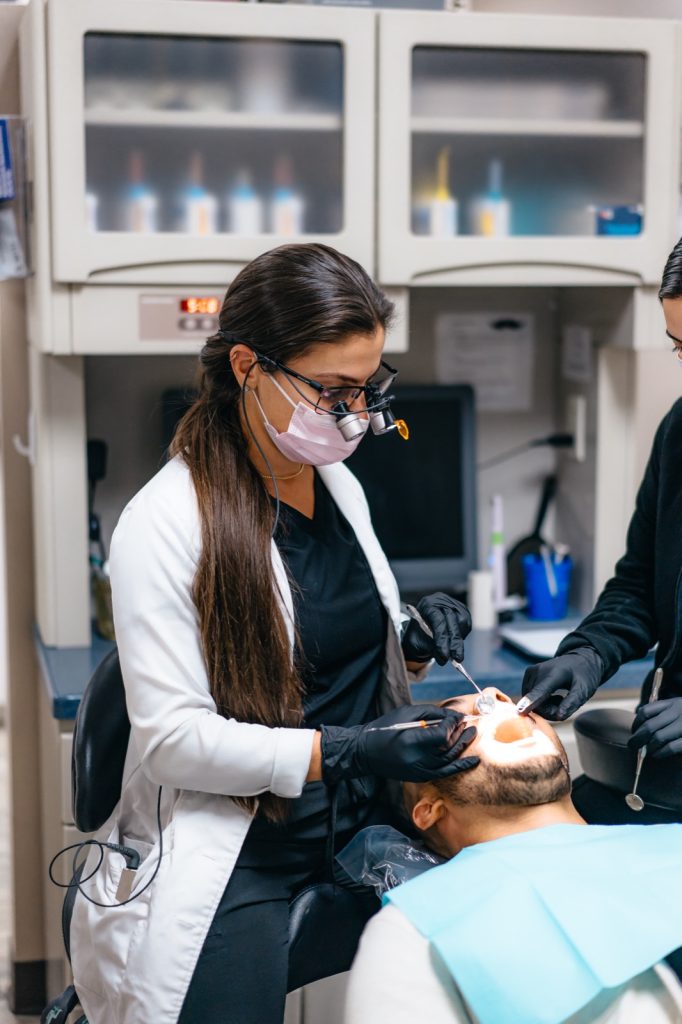
A patient called us on a Monday morning after spending the entire weekend near Westgate Entertainment District, a concert Saturday, a family dinner Sunday, managing what she thought was “just a sensitive tooth” with ibuprofen. By Sunday night she couldn’t sleep. By Monday she could barely open her jaw. She needed a root canal, and she needed it that day.
We got her in, got her numb, and she was eating soft food that same evening. She told me afterward she had no idea it would feel that manageable. That is the conversation I wish more people in Glendale had before the pain got to that level.
What a Root Canal Actually Involves (And Why It’s Not What You’re Imagining)
The phrase “root canal” carries more fear than it deserves. What we’re doing is removing the infected or inflamed pulp tissue from inside the tooth, cleaning and shaping the canals with small files, disinfecting thoroughly, and then sealing everything with a material called gutta-percha. After that, the tooth gets a crown, usually zirconia at our office, to protect it long-term.
The procedure itself is performed under local anesthetic. I don’t start anything until the area is completely numb, and I mean completely. We test it first. If you feel any sensation, we stop and add more anesthetic. The thing patients are almost always surprised by is how little they feel during the actual treatment. The discomfort people associate with a root canal is usually the infection they came in with, not the procedure we do to fix it.
Most single-canal teeth (front teeth, some premolars) take about 60 to 90 minutes. Molars with three or four canals take longer, sometimes two appointments. We walk through the exact timeline at your exam so there are no surprises.
How Much Does a Root Canal Cost in Arizona, and Why Does It Sometimes Reach $3,000?
Root canal pricing in Arizona varies based on which tooth is being treated. A front tooth (anterior) with one canal is the most straightforward. A lower molar with four canals is the most involved. The crown that follows the root canal is billed separately, and that’s often where sticker shock happens, patients see the root canal fee plus the crown fee together and the total climbs.
The $3,000 figure people search for usually reflects a molar root canal plus a zirconia crown at an out-of-network office, both billed together. At Glisten Dental Glendale, we work with most major dental PPOs and are in-network with many plans. We pull up your benefits before we quote anything out of pocket. I walk through it line by line, what insurance covers, what your portion is, and if the number feels out of reach, we figure out a path together. We have financing options.
If you’re a federal employee, it’s worth knowing we work with FEDVIP plans, you can read about how that coverage applies at our [FEDVIP dentist Glendale](https://glistenglendale.com/fedvip-dentist-glendale-federal-employee-dental-coverage/) page. Active duty or retired military can check our [TRICARE dentist Glendale AZ](https://glistenglendale.com/tricare-dentist-glendale-az/) page for how TRICARE dental benefits apply to endodontic treatment.
Does a Root Canal Affect Invisalign Treatment?
This comes up more than you’d think, and the answer is: yes, sequence matters.
If a tooth has active infection or pulp involvement, moving it with clear aligners before treating the root canal is a problem. You can apply all the aligner force you want to a tooth, but if the root structure is compromised or there’s a periapical abscess sitting at the tip of the root, you’re moving a sick tooth. That can accelerate the damage.
The right order is: treat the infection first, allow healing, then proceed with orthodontic movement. In most cases, once a root canal is complete and a crown is placed, that tooth can absolutely be included in an Invisalign treatment plan. The tooth just needs to be stable. If you’re already in the middle of aligner treatment and notice a tooth becoming sensitive or painful, tell us immediately, don’t just push through to the next tray. We see patients near Camelback Ranch and the State Farm Stadium area regularly who are managing both active aligner treatment and restorative needs at the same time, and coordination between both is something we handle in-house.
If you’re curious about Invisalign specifically, our [Invisalign Glendale AZ](https://glistenglendale.com/invisalign-glendale-az-straight-teeth-without-metal-brackets/) page covers the full process.
What Is the 3-3-3 Rule for Root Canals?
The 3-3-3 rule is a post-treatment guideline some practitioners use to set expectations for recovery: roughly 3 days of noticeable soreness, 3 weeks before the tooth feels fully settled, and 3 months before the bone and surrounding tissue have fully stabilized around the treated tooth.
It’s a reasonable general framework, though I want to be honest with you, it’s not a clinical standard with a specific governing body behind it, it’s more of a practitioner shorthand. What I tell patients in our office is this: expect some tenderness for a few days after treatment, especially when biting down. That’s normal. The tooth went through something. Take ibuprofen as directed, eat on the other side, and avoid anything hard or crunchy for a week.
If pain is escalating after three or four days rather than improving, call us. That is not normal, and it usually means we need to take another look. Severe, worsening pain after a root canal can indicate a missed canal, a crack in the root, or a reinfection, all of which are manageable if caught early and worse if ignored.
When to Call Us Versus Wait It Out
Tooth pain that has been going on for more than 48 hours without improvement, pain that wakes you up at night, swelling anywhere near the jaw or below the eye, or a tooth that is extremely sensitive to heat (not just cold), any of those warrants a call to us, not a few more days of ibuprofen.
We keep same-day slots specifically for situations like this. If your tooth has been hurting since Friday, do not wait until Monday hoping it resolves. The infections that start small over a weekend are the same ones that become emergency extractions by Tuesday. Our [emergency dentist Glendale AZ](https://glistenglendale.com/emergency-dentist-glendale-az/) page has more on how same-day urgent care works at our office.
If you’re in pain right now, call us. We will get you in, we will get you numb, and we will not start anything until you don’t feel a thing.